
Here are some questions to think about as you are reading this piece of history. What were the causes of the Great Migration and the effects of it? Did the Great Migration from Southern states spark a positive change for African Americans as they traveled West? What types of racial violence did African Americans have to endure during their fight for equality and rights as American citizens? What were some reasons for this racial violence towards African Americans? Was there any acknowledgement from any American Presidents to end racial violence and fight for African Americans rights or equality?
Following the Civil War African Americans as a family and community had to stay together for survival. This time period was called the Reconstruction era. Racial violence plus discrimination continued to rise in Southern states. Jim Crow laws enforced legal racial segregation and violence towards African Americans up until the 1960s. Jim Crow laws implemented the “separate but equal” social systems in order to keep public schools, transportation services, drinking fountains, restaurants, and public restrooms segregated. Jim Crow laws were also implemented to keep African Americans from voting booths. Restricting African Americans from voting made it easier for to keep African Americans disenfranchised legally. Voting is one-way laws can be challenged and changed. So, many attempts were made to keep African Americans as legal slaves with no rights or equality. Jim Crow laws forced large numbers of Southern African American families to move North and West for better opportunities sparking the Great Migration. Jim Crow laws, racism, segregation, lack of employment, inadequate job training, and a denial of proper education followed African Americans during this migration to Northern and Western states. Something had to be done regarding these ongoing issues that African Americans faced daily as growing families with expanding communities.
Violence was one major cause for African American families to migrate. Some families went West because slavery still was not a distant memory. All one had to do was walk outside and see that not much had changed since the ending of the Civil War. Slavery was a means of control, fear, forced and free labor, meant for the profit of the slave master. This was the reality and social system that was the law before the Civil War. Segregation and Jim Crow laws were put in place following the Civil War. It does not take a rocket scientist to realize that Southern white slave owners had a difficult time accepting the fact that they no longer could survive. Nor rely on using fear to control African Americans for free labor and free profit. The same slave owners could not accept that these newly freed slaves were supposed to be granted rights and equality.
In 1877, the Federal Government withdrew army soldiers from Southern cities and states. The withdrawal of Federal troops in Southern cities caused racial violence to erupt in large numbers with little to no repercussion. Southern whites resorted to violence to assert their dominance over African Americans without any fear or regard of the law. Because Southern whites were usually the law officers and judges in the towns where they wanted to use violence to keep African Americans living in fear. Lynching was one choice of violence used by Southern whites. Enforcing white supremacy with the use of a rope and tree. Lynching enforced white supremacy in three ways; first it was a murder based on color and race. Second, any crime committed against white women at the hands of African American men was an excuse for lynching not a reason. Third, lynching was and is a national crime that needs to be addressed. The statistics of the number of lynchings shows that most victims are African Americans. Thus, making lynching murder based on color and race.
The Ku Klux Klan a white supremacist organization began shortly after the Civil War ended in Tennessee. The Ku Klux Klan is a racist political mob whose main purpose is and was to suppress the votes of African Americans by using intimidation and murder. In the year 1882 there were 52 lynchings. By the year 1892 the number of lynchings rose to more than 200. There were over 3,284 men, women, and children that were lynched in the quarter century following the Civil War. White men and white women only had to say that an African American man raped a white woman. That meant he was then convicted to death by lynching. There were times when white women would retract their claims of being raped but the accused was already dead by lynching. Lynchings were a public affair in Southern cities and states. Lynchings were looked upon as family gatherings for all to witness the death of an African American by the Ku Klux Klan. This was all to keep African Americans from voting for equality and rights as American citizens.
In Humphreys County, Mississippi. Reverend George W. Lee was murdered, simply for attempting to register African American voters. Something that I find shocking is that African Americans outnumbered whites in Humphreys County, Mississippi. The ratio of African Americans to whites was 2: 1. The number of registered voters dropped from 22,000 to 8,000 within a year of the murder of Reverend George W. Lee. Even though African Americans had a larger population, they were still victims of violence at the hands of the Ku Klux Klan and local politicians. Through all of this racialized violence there was no acknowledgment from the president due to fear of losing votes. African Americans began to distrust the government. African Americans came to the realization that their votes did not matter even when they were the larger population.
African American journalist Ida B. Wells led a crusade like anti-lynching campaign beginning in 1891. Her mission was to bring awareness to and stop lynching in Memphis, Tennessee. In 1897, Ida B. Wells was removed from a train for sitting in the whites only section. She sued the train company and won the judgment but lost on an appeal. Ida was a brave woman; she was an editor of a newspaper named Free Speech. Ida B. Wells published numerous articles about the lynching of three African American men. Shortly after her life was threatened. Ida’s home and office were set on fire by the Ku Klux Klan. Ida B. Wells moved to New York City, New York where she continued her work as a journalist. Ida B. Wells continued to publish her newspaper while leading the anti-lynching campaign for another ten years. The National Association for the Advancement of Colored People (NAACP) joined her fight. Shortly after the United States Military Intelligence named Ida B. Wells “The most dangerous Negro agitators in the country.
The Southern economy collapsed following the culmination of the Civil War. The Southern economy relied on the free and forced labor of African Americans under the system of slavery. The Southern economy failed without the forced and free labor of African Americans. It was said that “The negro is our only way and best form for domestic labor.” So, the mission was to stabilize a cheap labor force while continuing white supremacy in Southern states. The passing of the 15th Amendment prohibited voting rights based on discrimination based on race. Southern states also added qualifications such as literacy tests, poll taxes, and the grandfather clause to keep African Americans from voting booths. Confederate states also passed Black Codes.
Black Codes forced formerly enslaved African Americans to sign yearly work contracts or else be sent to jail for vagrancy. Black Codes dictated when, where, and how much formerly enslaved African Americans could work. Black Codes were a legal form of indentured servitude. Indentured servitude was a 17th – 19th century labor system. Indentured servitude made individuals often times European immigrants’ contracts to work without wages. Indentured servitude contracts lasted anywhere from 4 to 7 years. Indentured servitude contracts forced these immigrants to not only work without wages, but they were an exchange for room and board as a passage to the American colonies.
African American families had to deal with forced and free labor, segregation, violence, and Black Codes. These were all laws put in place by the American government in order to keep African Americans at the bottom of totem pole in society. African Americans were kidnapped then transported to distant lands based of the color of their skin. Thus, creating the Africa Diaspora. Strip Africans of their religion, names, language, culture and history. Segregation kept America separated from sharing public spaces. In private African Americans had to endure violence and brutalities in the homes and forced shared spaces they had no choice in sharing with white slave owners. Jim Crow laws existed for close to 100 years with the intention to marginalize African Americans denying them freedom, equality, justice, and rights. Voting was the best option African Americans had collectively in order to change their situations, but these laws were put in place to make sure that the task would be as difficult as possible.
Frederick Douglass once said, “Slavery is not abolished until the Black man has the ballot,”. This quote is very powerful. What it means to me is that there is no way for African Americans to be truly free unless they can vote. Voting is what makes a democracy a democracy and this is the system that America set its principles in while it was being established. These rights were not meant for African Americans. They were meant for white men, white women, and immigrants first. Leading up to the next system of profit that was implemented by The Freedman’s Bureau called sharecropping.
The Freedman’s Bureau was supposed to redistribute confiscated confederate land to previously enslaved African Americans. In the book The Second American Revolution author Eric Foner writes, “Most Republicans were unwilling to go this far, but they did insist that blacks should enjoy the same opportunities as whites to compete for advancement in the economic marketplace”. But instead, President Andrew Johnson gave the previous owners their land back leaving the formerly enslaved with no land and limited to no opportunities. The formerly enslaved had nowhere to go so they went back to the same plantations where they were once enslaved. Sharecropping is a type of agricultural farming that allows families to rent small plots of land from landowners. In return the farmers would give a portion of their crop to the landowner at the end of each year. Sharecropping was problematic for the formerly enslaved for several reasons. The first reason being that the formerly enslaved did not own farming tools, so they had to rent them on credit from landowners for a fee. The second reason is that the formerly enslaved depended on the crop yield and if they did not meet the requirements they would be indebted to the landowner. Debt to the landowner meant that the formerly enslaved had to stay and work on the land for no profit leading to being in more debt. If the formerly enslaved failed to pay their debt. They would be sent to prison. Or someone could pay their debt leading the formerly enslaved back into slavery once again.
Four leading factors that led to the Great Migration of African Americans to Northern states, and Western states from Southern states included violence, Jim Crow laws, Black Codes, and sharecropping. White Southerners did not react well to the migration of thousands of African Americans to the North and West. Because that meant their farms had less workers. Less workers meant that white Southerners had to do the same labor that they once were getting for free. After realization that much of the Southern economy depended upon the cheap labor force of African Americans. Southern whites began discouraging the migration of African Americans to Northern and Western states. Stories of success through economic opportunities gave Southern African Americans the courage to travel North or West. The first migration from Southern states to Northern and Western states took place between the 1880s and the 1890s just before World War 1. Violence along with the invention of better machinery helped agriculture. Better machinery cut the cost of labor which made job sourcing harder African Americans from farming jobs. The instability in the agricultural job market made the economy unstable for everyone especially African Americans. Economic instability drove millions of African Americans to Northern and Western states.
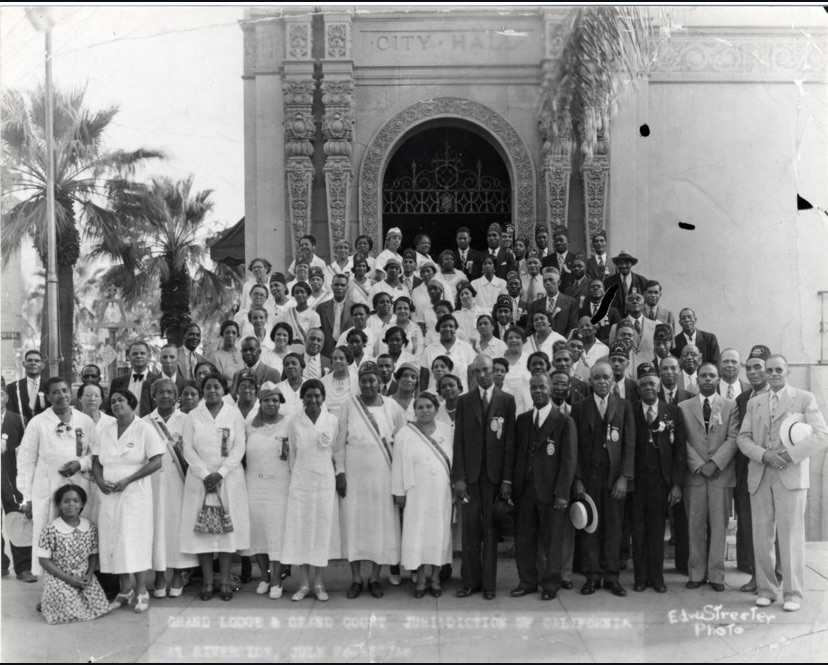
In 1910 over 90 percent of African Americans lived in Southern states. By 1940 that percentage dropped to 77. African Americans migrated to large cities Like Chicago, Detroit, Pittsburgh, New York, and Los Angeles. In those cities African Americans found jobs in the auto, meat packing, steel and iron industries. African Americans earned 4 times as much as they would have earned working in these industries in Northern states and Western states than they would have earned in Southern states. The migration to Northern states and Western states made urban life in America look different. Southern African Americans that migrated to Northern states and Western states were nicknamed the Exodusters as they continued to fill larger cities. African Americans had to come together for mutual support because prejudice and racism forced them into racially segregated areas. In Northern states and Western states African Americans were less vulnerable to the extremes of racial discrimination and attacks from white Americans. In Northern states and Western States African Americans had better access to educational opportunities. Better access to educational opportunities meant there would be better opportunities for economic growth and development. In Northern states and Western states African Americans were able to vote without the fear or threat of violence. Without the fear or threat of violence African Americans were able to form their own political organizations.
Consumer markets had an economic rebirth as African American were able to pay for services received from established African American professionals in the new urban communities they moved into. Shortly after this economic rebirth African Americans began to see a new potential for economic freedom due to the higher wages they were earning. Urban factories were filled with African American workers changing the lives and culture for these communities. African American men found jobs on railroad yards, shipyards, steel mills, and meat-packinghouses. African American women found jobs as domestics in the homes of middle-class working professionals and hotels in the tourist, entertainment, and service industry.
When the United States formerly entered World War 1 in April 1917. 370,000 African American men served in the war. African American women had to enter into the industrial factories where they manufactured consumer goods and hardware that needed to be used for the war. Unlike the wages African American women earned working as domestics before the war. Wages African American women earned working in industrial factories were higher than wages earned working as domestics. While working in industrial factories, African American women worked less hours. Working less hours in industrial factories meant African American women had more time to be with their children.
While in a foreign land fighting in the war African American men were constantly harassed and insulted by white American soldiers. There was a system within the military that was similar to Jim Crow that white American military police enforced. These United States military laws on foreign soil prohibited African American men from walking and talking to French women. In France during World War 1, African American men were growing more conscious that they were risking their lives fighting for democracy in a foreign land. It was in France when African American soldiers experienced some sort of racial equality. A cause for the growth of consciousness African American soldiers was credited to African soldiers fighting for France in the same war. When African American soldiers returned home from the war, they were willing to do the same in the United States. Out of fear of this new consciousness that African American soldiers were returning home with. White Americans again grew violent and began attacking African American soldiers that recently returned home from military duty. Riots erupted during the summer of 1917 in East St. Louis and Illinois as white Union workers attacked African American workers. The mob of white rioters burned African American neighborhoods causing damage to property. In the aftermath of the rioter’s attacks, hundreds were dead and injured. There were over 26 riots that took place during the summer of 1917 in cities all over the United States. The migration to Northern states and Western States created a new experience of what it meant to be African American. This new experience created a more urban, a more militant, a more political, and a more economically conscious African American.
Formed in Harlem, organizations such as the United Negro Improvement Association led by Jamaican born immigrant Marcus Garvey “A black owned corporation, owning and operating a chain of businesses, groceries, hotels, restaurants, laundries, small factories and a shipping company the Blue Star line, this multimillion- dollar corporation was both an impressive capitalist venture and a cultural movement expressing racial pride and the rhetoric of social progress”. As written in The Harlem Renaissance Between the War. Marcus Garvey appealed to African Americans because he was speaking about the racial discrimination and white supremacy caused by the African Diaspora. Marcus Garvey helped to create a racial consciousness through racial solidarity that he felt was needed for African Americans to take social action in order to change their situation like economic disparity and racial violence. Marcus Garvey was not the only prominent leader that emerged during this time. Having opposed rhetorical stances, Booker T. Washington and W.E.B. Dubois are 2 more leaders that emerged to unite the African Diasporic fight against economic disparity and racial violence. Advocating for integration for African Americans, W.E.B. Dubois advocated for advancement into American politics and economics. W.E.B. Dubois advocated for the development of an intellectual elite. W.E.B. Dubois named this intellectual elite the “talented tenth” of African Americans that would provide more leadership for the race. Booker T. Washington was born a slave in Virginia, then rose to prominence as an educator and political leader. As written in Populism, Industrial Unions, and the Politics of Race, during a speech in Atlanta, Georgia. Booker T. Washington declared that “it was necessary for African Americans to accept the developing Southern system of racial segregation”. Booker T. Washington was assuring the Southern population that if they just let African Americans live in peace with stable jobs and an adequate education that they would not resist the system of Jim Crow. Many African Americans believed that this would invite more violence towards them. Written is his book The Souls of Black Folk, W.E.B. Dubois challenged Booker T. Washington’s approach to ignoring violence and injustice while not agreeing that African Americans should only learn practical skills that would prepare them for the work force as the only way for African Americans in achieving social equality. Despite Booker T. Washingtons’ attempts to negotiate with white Southerners regarding racial violence. Race riots and lynchings of African Americans continued to rise at high rates. In September of 1906 in Atlanta, southern whites became enraged about the voting rights of African Americans and began burning and killing random African Americans in African American communities. When the violence ended 10 African American men and women were killed and 60 others were wounded.
In Springfield, Illinois a violent rioting white mob wreaked havoc in the city for 6 days. The violent rioting white mob beat and killed African Americans forcing hundreds of African Americans to leave the city. White supremacy was the reality of American politics in the early 20th Century. Minstrel shows and blackfaces depicting racial stereotypes and racist caricatures of African Americans was normal advertising for growing corporations and small businesses abroad and in the United States. Blackfaces and racist caricatures were printed in magazines, marketing advertisements, music, motion pictures, on food packages, and other household products. African Americans had to live and learn from these racist advertisements because there was no denouncing of the depictions nor any acknowledgment from any politician or president.
In Northern states and Western states African Americans were able to express racial pride and self-assertion economically and politically. The era of the “New Negro” began to emerge with the rise of African American intellectuals, writers, artist, and musicians. This emergence of intellectual and cultural expression sparked the Harlem Renaissance. Economic growth in African American communities during the 1920s helped to shape a new cultural rebirth. The cultural rebirth in Harlem shaped the sound of music that spread through urban communities all over the country. The sound and music used incorporated improvisational elements of blues and southern folk music. The new sound that emerged was named Jazz. Southern migrants took their culture to the North and filled the dancefloors of New York City. The New York City nightclubs drew whites into Harlem where they would enjoy the entertainment being performed by African American musicians. Paul Robeson and Florence Mills grew to fame by performing in Broadway shows. Jazz was a cultural phenomenon, but some African American middle-class families did not approve of the new sound calling it provocative. The disapproving African American middle-class believed the musical culture reinforced racist stereotypes that they were trying to shed the negative image of.
Within the African American community class colorism played a major part of the division amongst African Americans. Colorism played a role amongst African American musicians. Mixed-race African American musicians separated themselves from dark complexioned African Americans. In The Harlem Renaissance between the Wars, the author writes, “Shade of skin color had significance in the social structure of all African Americans, but historically, it was much more important in the South than in the North, particularly in the lower South”. The division of color amongst African Americans created a social hierarchy within the society of African Americans because they were already oppressed. Colorism is counterproductive for African Americans because they were already in a fight against white supremacy and racism in America and the Diaspora of Africans globally.
The passing of the 18th Amendment in the United States Constitution made the manufacture, sale, or transportation of alcohol illegal. The passing of this law created an illegal market prohibiting the sale of alcohol in nightclubs. Organized crime controlled the production and sale of alcohol. White criminals ran large operations with little resistance from the law, while African American criminals were arrested at higher rates than their counterparts. During this prohibition of the sale of alcohol, crime and politics were close. Criminals had to pay politicians for protection in order to continue the illegal activities. In return, politicians would use criminals to gain more political power for their votes. African Americans had little to no influence in political matters at national levels because Congress nor any President recognized racial discrimination, disenfranchisement, lynching or any racial violence.
Finally in 1920, Republican President Warren G. Harding made a call for all Americans to stand against social equality for the races and to oppose racial amalgamation. Racial amalgamation means the interbreeding of different ethnicities or mixed races becoming one. President Warren G. Harding died in office leaving Calvin Coolidge as his successor. President Calvin Coolidge also failed to recognize the issues in the United States regarding race and discrimination. Due to all of the events following the Civil War the political party of choice for African Americans was the Republican party. Why? Because President Abraham Lincoln was part of the Republican party. African Americans supported President Abraham Lincoln because he opposed slavery. The Southern Democrats favored slavery in all territories and its expansion of the United States. In Southern states African Americans were violently attacked by Southern Democrats when they attempted to vote for change. During the 1920s the Republican party attempted to gain the votes of Southern whites. In turn African Americans began questioning their own allegiance to the same party. President Herbert Clark Hoover did nothing to gain the votes of African Americans. His first wife Lou Henry Hoover supported anti-lynching and was a friend to African American woman philanthropist Mary McLeod Bethune. President Herbert Clark Hoover hired African Americans as his advisors on racial matters. In the election of 1932 about 1 in 4 African American voters in Northern states voted for Franklin D. Roosevelt. Electing Franklin D. Roosevelt for a second term in 1934 after previously being President in 1901 to 1909.
The Great Depression began in 1929. In 1934 President Franklin D. Roosevelt created programs for a modern system called welfare under the New Deal. The New Deal provided low-income public housing, the Civilian Conservation Corps, the Works Progress Administration, and the Congress of Industrial Organization. These programs enabled African American youth to be able to continue their education or receive skills for employment. Under the Works Progress Administration, African Americans were able to hold Federal government jobs. These programs were popular amongst the African American community. African Americans began to realize that they were often last to receive assistance from this program. Why? Because if they got any assistance, it would often times go to poor whites first.
Violence, segregation, lack of economic opportunities, and racial discrimination in Southern states caused the migration of African Americans into Northern states and Western States. Not long after the arrival into these states, racial violence and discrimination continued. Collectively African Americans were able to create several cultural rebirths and racial pride. Fighting in wars domestically and abroad raised the consciousness of African Americans by recognizing they were fighting for the democracies for all African peoples affected by the African Diaspora. The migration to Northern states and Southern states created some positive movement in the right direction economically, politically, and the education which unified Africans and African Americans globally in the Diaspora of Africa. The new political African American gave way to the next generation of leaders that continue to fight against oppression and the freedom of all disenfranchised globally.

 95 Golden Substance & Culture Magazine